Do You Have a Transmission Fluid Problem?
 Your vehicle has many different types of fluids, which perform specific functions to keep it running well. One of the most important automotive fluids is your transmission fluid. It provides important hydraulic and cooling functions within the transmission system. Without an ample amount of clean transmission fluid, your transmission will eventually start to experience problems and may fail completely. Major internal damage can occur.
It’s important to have your transmission fluid inspected periodically to ensure it is at the proper level and quality. You will also want to keep up with routine transmission maintenance. A standard transmission service will involve draining the pan, replacing the transmission filter and pan gasket, and adding new automatic transmission fluid (ATF). Transmission maintenance isn’t required often (usually recommended every 30,000-60,000 miles, depending on the vehicle). However, it is critical to keep your transmission as healthy as possible.
Here are a few signs that you might have transmission fluid issues and may be overdue for a transmission service:
Low Transmission Fluid
Most vehicles will have a dipstick (similar to your oil dipstick) or some other system that enables you to check your own transmission fluid level. If it is low, it may be a sign of a bigger problem. If you are adding transmission fluid yourself, make sure you are using the right type. The wrong fluid could cause even more problems.
Poor Transmission Fluid Quality
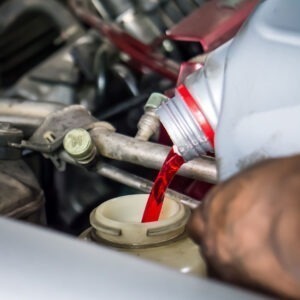
If you are able to look at the transmission fluid, you will want to pay attention to its quality and consistency. It should be viscous and a translucent bright red in color (though different types of fluid may have different colorations). If it is dark, dirty, burnt, milky, thick or otherwise not looking clean, you will want to get your transmission checked out by a specialist. You may simply be due for service or it could be another problem that needs to be addressed.
Transmission Fluid Leak
If you notice transmission fluid leaking from under your vehicle, that is definitely cause for concern. It could be something as simple as a damaged/worn seal, or it might be something more significant.
Performance Problems
You might encounter some general transmission performance problems as a result of low, old or contaminated transmission fluid. Examples include a slipping transmission, grinding gears, sluggish acceleration, burning smells or strange noises.
Warning Lights & Messages
A transmission fluid issue could ultimately trip your check engine light or other specific warning lights (and computer messages) like the transmission temperature gauge.
It’s always smart to take care of your transmission, along with all aspects of automotive maintenance. If you do notice any potential transmission problems, it’s best to take care of it right away. If not, you risk a complete transmission failure that may require rebuilding or replacing your entire transmission unit.
For all your transmission repair and maintenance needs in the Central Valley, call Ralph’s Transmission today at 209-526-1909 or schedule a service appointment online.
Contact Us
"*" indicates required fields
Recent Posts
Why Your Transmission Slips Between Specific Gears
When an automatic transmission is working properly, gear changes should feel smooth and consistent. If your engine suddenly revs higher during a shift or your vehicle briefly loses acceleration, the transmission may be slipping. Sometimes…
Why Your Truck’s Transmission Shudders Under Load
When you’re towing a trailer or hauling a heavy load, your truck’s transmission has to work harder than it does during normal driving. If you notice shaking, vibration or a shuddering sensation during acceleration, it…
Why Some Transmission Problems Can Be Intermittent
Transmission problems don’t always happen consistently. Your vehicle might shift roughly one day and operate normally the next. You may notice hesitation during a long drive but experience no problems on shorter trips. These intermittent…